
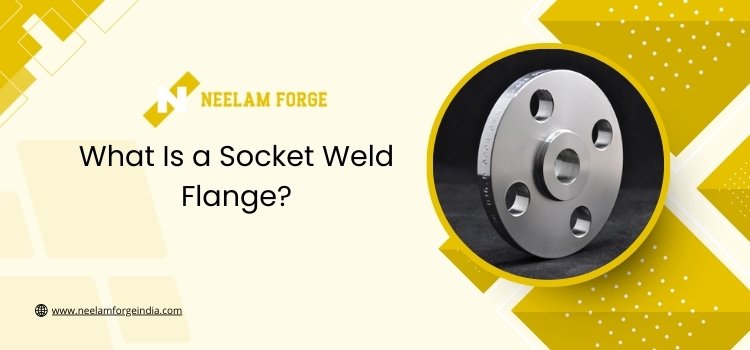
In high-pressure industrial piping systems, ensuring leak-proof connections is non-negotiable. A socket weld flange is a highly specialized, reliable pipe fitting designed precisely for these demanding environments. Whether you are dealing with petrochemical processing, power generation, or severe-duty infrastructure, understanding what a socket weld flange is and its unique benefits is critical for long-term structural integrity.
Unlike standard pipe flanges, this specific design requires inserting the pipe into a recessed area (the socket) within the flange before applying a fillet weld around the exterior. This creates exceptional alignment, smooth internal fluid flow, and strong structural integrity for the joint.
How Does a Socket Weld Flange Work?
A socket weld pipe flange works by allowing a pipe to rest cleanly inside its inner shoulder or socket. A continuous fillet weld is then applied to the outside circumference to secure the connection. This design offers:
- Smooth Internal Fluid Flow: The inner shoulder matches the pipe bore closely, minimizing flow restrictions.
- High-Integrity Connections: A strong, continuous welded joint that resists vibration-induced failures.
- Reduced External Leakage Risk: A reliable exterior seal for systems handling toxic or high-value fluids, within the service limits noted below.
- Precision Alignment: Well suited to small-diameter piping installations where precise alignment matters.
Key Advantages of Socket Weld Flanges
Engineers frequently choose socket weld flanges for demanding industrial processes due to several distinct advantages:
- Strong Sealing Performance: Reliable performance under significant pressure and temperature fluctuations, within the alloy and class rating specified.
- Superior Centering: The socket aligns the pipe automatically without tack welding, offering better centering than standard slip-on flanges.
- Reduced Welding Defects: Since welding occurs exclusively on the outside, there is no risk of weld spatter entering the pipe bore.
- Cost-Effective Installation: Faster and easier to install than weld neck flanges, reducing labor time.
Where Socket Weld Flanges Are Not the Right Choice
Two limitations are worth knowing before specifying a socket weld flange:
- Crevice Corrosion Risk: The small gap left between the pipe end and the socket base (needed for thermal expansion) creates a crevice where fluid can stagnate. In severely corrosive or erosive services, this crevice can become a site for localized corrosion, for these applications, a weld neck flange with a full-penetration butt weld is often the safer choice.
- Limited Weld Inspection: Because the joint is a fillet weld rather than a full-penetration butt weld, it can’t be radiographically inspected as thoroughly. If your project spec requires full RT/NDT verification of the weld, confirm whether socket weld is acceptable before specifying it.
Common Facing Options for Socket Weld Flanges
Beyond the socket weld body style itself, the flange face, where the gasket seats, also needs to be specified:
1. Raised Face (RF) Socket Weld Flange
- Concentrates gasket pressure onto a smaller surface area, improving the seal.
- Widely used in high-pressure oil and gas processing.
2. Flat Face (FF) Socket Weld Flange
- Features a mating surface that sits flush with the bolting face.
- Typically used for lower-pressure applications and cast-iron piping systems where bending stress must be minimized.
3. Ring-Type Joint (RTJ) Socket Weld Flange
- Features a machined groove designed to house a metal ring gasket.
- Engineered for extreme-temperature and ultra-high-pressure environments, providing a metal-to-metal seal.
Socket Weld Flange Dimensions and Standards
To ensure global compatibility, socket weld flange dimensions are manufactured in accordance with recognized international standards. The most common is ASME B16.5.
Dimensions and pressure ratings vary based on:
- Nominal Pipe Size (NPS) and Bore Size
- Pressure Class Ratings: Ranging from Class 150 to Class 2500.
- Flange Thickness and Bolt Circle Diameter
Adhering to standards like ASME, ANSI, DIN, and BS supports system safety and integration with existing infrastructure.
Major Industrial Applications
Because they handle high pressure while requiring minimal internal welding, socket weld pipe flanges are widely used across heavy industries, with the crevice-corrosion caveat above kept in mind for the most aggressive services.
- Oil & Gas Pipelines: Transport of hydrocarbons in small-diameter, high-pressure lines.
- Steam Distribution Lines: Handling superheated steam safely.
- Chemical Processing Units: Suitable for many process chemicals; consult a corrosion engineer for highly corrosive or erosive media given the socket’s crevice geometry.
- Hydraulic Systems: Managing the high impact loads of hydraulic fluid transfer.
- High-Pressure Water Supply: Used extensively in municipal and industrial fluid management.
Socket Weld vs. Slip-On Flange: Which is Better?
One of the most frequent comparisons in pipe fitting is evaluating a socket weld vs slip-on flange.
- The Welding Process: A socket weld requires only one continuous fillet weld on the exterior. A slip-on flange requires two fillet welds (one inside, one outside).
- Strength and Pressure: Socket weld connections generally offer better fatigue strength and higher pressure resistance than slip-on joints.
- Pipe Alignment: The recessed shoulder of the socket weld automatically aligns the pipe, whereas slip-on flanges require manual centering.
- Best Use Case: Socket welds are ideal for high-pressure, small-diameter pipes (typically NPS 2″ and smaller). Slip-on flanges are generally more suitable for low-pressure, large-diameter piping.
Conclusion
A well-selected flange is the backbone of any safe industrial pipeline. High-quality socket weld flanges deliver precise pipe alignment, strong pressure resistance, and reliable connections in small-bore, high-pressure service, provided the process media and inspection requirements are matched to the design’s known limitations. For volatile hydrocarbons, high-pressure steam, and many standard chemical services, this flange design remains one of the most trusted fitting solutions on the market.
Frequently Asked Questions (FAQs)
Q1. What is the primary purpose of a socket weld flange?
The primary purpose is to provide a secure, leak-resistant connection for small-diameter, high-pressure piping systems commonly found in the petrochemical and power generation industries.
Q2. Can a socket weld flange handle higher pressure than a slip-on flange?
Yes. Because the pipe sits securely in the internal socket, a socket weld flange typically offers higher fatigue strength and handles pressure better than a standard slip-on flange.
Q3. Why is there a gap left during the installation of a socket weld flange?
A small gap (usually 1/16 of an inch) is intentionally left between the end of the pipe and the bottom of the socket. This gap accommodates thermal expansion during operation and prevents the weld from cracking, though it’s also the reason socket welds aren’t ideal for highly corrosive or erosive service (see limitations above).
Q4. Is a socket weld flange a good choice for corrosive chemical service?
It depends on the severity of the service. Socket weld flanges work well for many standard process chemicals, but the small crevice at the base of the socket can become a site for localized corrosion in aggressive or erosive media. For severely corrosive service, a weld neck flange with a full-penetration butt weld is often specified instead.
Ready to source premium, high-quality industrial flanges?
Strengthen your next big project with world-class piping components. Contact us today or reach out via email at sales@neelamforgeindia.com for expert technical guidance and competitive pricing.