
Understanding the Role of Socket Weld Flanges in Piping Systems
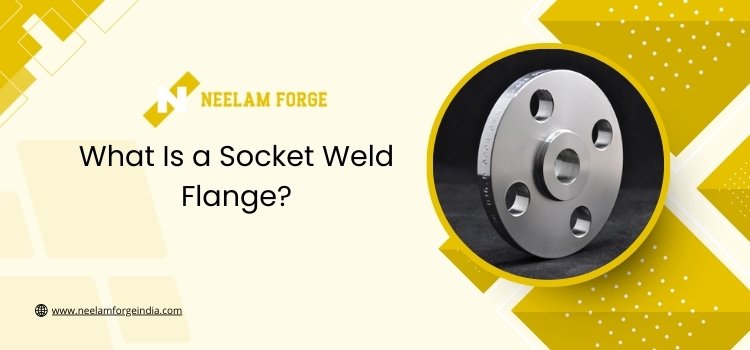
A socket weld flange is a common component used in a high-pressure piping system that withstands and does not leak. When working in the construction sector, petrochemical, power production, and large-scale infrastructure development, the choice of the flange type is important in terms of long-term reliability. When discussing What is a Socket Weld Flange? Design, Uses, and Benefits, it can be seen why this design is relied upon by many engineers, contractors, and architects of the project. It has an exclusive design in which a pipe is embedded into a concave space of the flange before welding, which has satisfactory alignment and strength.
Socket Weld Flanges: What They Are and How They Work?
A socket weld flange is a type of flange that allows the socket to be placed inside a recessed area and then welded around its outer circumference. This design ensures:
- Well-trusted, endearing relationships.
- Smooth fluid flow.
- Reduced risk of leakage
- Improved correspondence in small piping installations.
Socket weld flanges are frequently utilized by engineers in systems where the pipe has a small diameter and high pressure is required.
Advantages of Socket Weld Flanges in Industrial Applications
The socket weld flanges have many benefits for industrial processes that demand reliable functions:
- Sealing that is leak-proof as a result of high-integrity welding.
- Seals well in high-pressure environments.
- Extraordinarily improved pipe centering than slip-on flanges.
- Reduced welding defects
- Lower installation time
It is because of these advantages that they are needed in production, petrochemical refineries, construction piping systems, and hydraulic lines.
Types of Socket Weld Flanges
Knowing the various kinds of socket weld flanges will enable professionals to settle on the appropriate design when they need to design a system. Common types include:
1. Raised Face Socket Weld Flange.
- Offers improved sealing
- Applied in industrial processes of high pressure.
2. Flat Face Socket Weld Flange
- Applied in low-pressure cases.
- Usually found in basic structure and water supply.
3. Ring-Type Joint (RTJ) Socket Weld Flange.
- Constructed to withstand very high pressure and temperature.
- Gives metal-to-metal sealing in the challenging conditions.
Evenly used as the secondary keyword, types of socket weld flanges.
Socket Weld Flange Dimensions and Standards
Socket weld flanges are manufactured in line with world standards, including:
- ASME B16.5
- DIN Standards
- ANSI
- BS Standards
Dimensions tend to be different according to:
- Pipe bore size
- Pressure class
- Flange thickness
- Bolt circle diameter
This standardization assists architects, construction heads, and contractors in upholding quality in all execution phases.
Applications of Socket Weld Flanges in Construction & Industrial Projects
Socket weld flanges are also in demand since they are able to withstand pressure and require less welding than other types of flanges.
Common Applications:
- Oil & gas pipelines
- Steam distribution lines
- Chemical processing units
- Hydraulic systems
- Heating and cooling systems in industries.
- Water supply pipelines of high pressure.
These attributes render socket weld flanges inevitable in the heavy-duty industrial settings.
Socket Weld Flange vs Slip-On Flange
A better explanation of what a socket weld flange is is to explain it in terms of a slip-on flange.
Key Differences
- Welding Method: Socket weld contains one fillet weld slip-on two.
- Advantage: Socket-weld flanges are better in terms of pressure resistance.
- Installation: Slip-on flanges are less powerful but simpler.
- Alignment: Socket weld offers higher alignment of small-diameter pipes.
This analogy explains why socket weld flanges are the favorite of contractors when it comes to high precision and high-pressure systems.
Conclusion
To conclude, we have discussed the definition of a socket weld flange, its operation, types of flanges, advantages, and its uses. Socket weld flanges are essential in the industries and building sector in terms of improving pressure management to providing better alignment. Knowing these points will enable the engineers, architects, and contractors to make better and solid decisions that will ensure better long-term piping performance.
FAQs
Q1. What does a socket weld flange mean in high-pressure piping?
The socket weld flange is designed to provide high-pressure, small-diameter piping that is reliable and has no leaks in the connection between processes within oil and gas and chemical processing applications.
Q2. Do socket-weld flanges resist slip-on flanges?
Yes, socket weld flanges are more resistant to higher pressure and alignment, thus better suited to a high-pressure carefree industrial environment.
Q3. What are the benefits of using socket weld flange connections?
They have leak-free joints, reduced installation errors, higher flow efficiencies, and increased structural strength.
Ready to source high-quality socket weld flanges?
Strengthen your industrial and construction projects with reliable piping components.
Contact us today for premium-grade socket weld flanges and expert guidance: sales@neelamforgeindia.com