
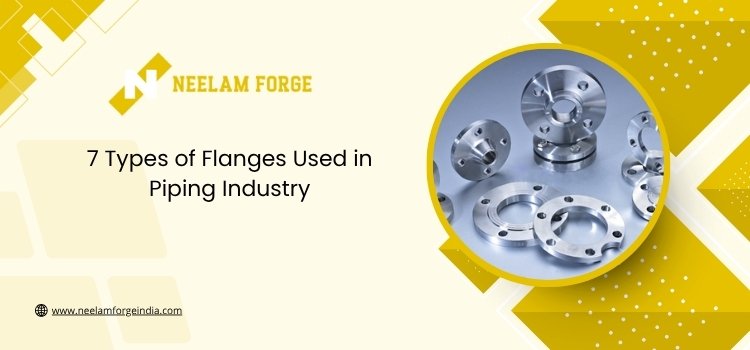
Overview of the 7 Most Common Types of Flanges Used in Piping Systems
Flanges are one of the most important connection components in any piping system. They join pipes, valves, pumps, and other equipment together in a way that’s easy to assemble, inspect, and take apart again, without cutting into the line every time maintenance is needed. Whether you’re specifying components for a refinery, a chemical plant, or a water treatment facility, understanding the different flange types available is the first step toward building a safe, leak-proof system.
Below, we break down the seven flange types most commonly specified across heavy industry, along with pressure ratings, typical sizing, and where each one fits best.
Why Flanges Matter in a Piping System
Rather than welding every joint permanently, flanges let engineers bolt sections together. That single design choice has a few major downstream benefits:
- Fast assembly and disassembly for maintenance or line changes
- Easy access for internal inspection and cleaning
- Reliable, leak-proof seals when paired with the right gasket
- Rated performance under high pressure and high temperature
Flange Comparison at a Glance
| Flange Type | Connection Method | Typical Pressure Class | Best For |
|---|---|---|---|
| Weld Neck | Butt-welded to pipe | Up to Class 2500 | High pressure / high temperature |
| Slip-On | Fillet-welded, inside & out | Up to Class 300 (typical) | Low-pressure, fast assembly |
| Blind | No pipe connection (end cap) | Up to Class 2500 | Isolating or sealing line ends |
| Socket Weld | Pipe inserted into socket, fillet-welded | Up to Class 1500 (small bore) | Small-diameter, high-pressure lines |
| Lap Joint | Free-rotating over stub end | Up to Class 300 (typical) | Frequent disassembly / alignment needs |
| Threaded | Screwed onto threaded pipe | Up to Class 300 (typical) | Non-welded, low-pressure utility lines |
| Orifice | Bolted, paired with orifice meter | Matches line class | Flow measurement |
The 7 Flange Types Explained
1. Weld Neck Flange
Weld Neck Flanges have a long, tapered hub that’s butt-welded directly to the pipe. That tapered transition is the key detail it spreads stress gradually from the flange into the pipe wall instead of concentrating it at a sharp joint, which is exactly what you want in a system that’s going to see repeated pressure and temperature cycling. Because of this, weld neck flanges are the default choice in refineries and process plants handling hazardous or high-pressure media, and they’re commonly available up to Class 2500 for extreme-duty applications.
Best Application: High-pressure, high-temperature, and hazardous service lines.
2. Slip-On Flange
The Slip-On Flange slides directly over the pipe end and is secured with fillet welds on both the inside and outside face. It’s a favorite where speed matters alignment is far more forgiving than a weld neck flange, since the pipe doesn’t need to be cut to an exact length. The tradeoff is a lower fatigue strength (roughly two-thirds that of a comparable weld neck flange under cyclic loading), so it’s best reserved for lower-pressure, less demanding service.
Best Application: Low-pressure fluid systems and installations where fast turnaround matters more than maximum strength.
3. Blind Flange
The Blind Flange is a solid disc with no center bore, used to cap the end of a pipe run, valve, or pressure vessel. Because it has no pipe to weld to, it takes on more bending stress than any other flange type in the lineup, which is why blind flanges are typically forged from thicker material for a given pressure class. They’re also the go-to choice for hydrostatic pressure testing before a system is commissioned.
Best Application: System isolation, dead-ending a line, or pressure testing before startup.
4. Socket Weld Flange
Socket Weld Flanges have a recessed socket that the pipe slides into before being secured with a single external fillet weld. Because the weld doesn’t penetrate the bore, the internal flow path stays smooth, reducing turbulence and the risk of erosion at the joint. They’re most common in smaller-diameter, high-pressure piping (typically 2 inches and under), where a fully welded connection is needed but a butt weld isn’t practical. One detail worth flagging to installers: a small gap is normally left between the pipe end and the socket base to allow for thermal expansion.
Best Application: Small-bore, high-pressure piping networks such as instrument or hydraulic lines.
5. Lap Joint Flange
Lap Joint Flanges work as a two-piece system: a stub end (welded to the pipe) and a separate backing flange that rotates freely around it. Since the flange itself never touches the process fluid, it can be reused across multiple stub ends, a real cost advantage on systems that are dismantled often for cleaning or inspection. The tradeoff is lower pressure and fatigue performance compared to a one-piece weld neck design.
Best Application: Piping systems requiring frequent maintenance, cleaning, or inspection, or where dissimilar materials need to be joined economically.
6. Threaded Flange
Threaded Flanges screw directly onto matching threaded pipe, with no welding required at all. That makes them useful in situations where welding is impractical or unsafe for example, in explosive atmospheres, or on galvanized/coated pipe where welding would burn off the coating. The tradeoff is that the threads themselves are a potential leak path under pressure or thermal cycling, so they’re generally limited to lower-pressure utility, water, or air service.
Best Application: Low-pressure, non-welded connections such as utility, water, or compressed air lines.
7. Orifice Flange
Orifice Flanges are installed as a pair on either side of an orifice plate, with radial and flange taps machined in to connect pressure-sensing instruments. The pressure differential measured across the plate is used to calculate flow rate, making this flange type less about the pipe connection itself and more about enabling accurate process instrumentation.
Best Application: Flow measurement and metering skids in process instrumentation systems.
How to Choose the Right Flange
Selecting the correct flange comes down to four main factors:
- Operating pressure and temperature, this determines the pressure class (150 to 2500) you need
- Material compatibility: carbon steel, stainless steel, or alloy, matched to the process fluid
- Pipe size and schedule: the flange bore must match the pipe’s outer diameter and wall thickness
- Maintenance requirements: how often the joint will need to be opened for inspection or cleaning
Always verify your selection against recognized standards such as ASME B16.5, ANSI, or DIN before specifying or ordering.
Common Flange Materials
- Stainless Steel: Strong corrosion and rust resistance, hygienic, common in food, pharma, and chemical service.
- Carbon Steel: Economical and strong, the default for general industrial use.
- Alloy Steel: Formulated for extreme high-temperature or high-stress applications.
- Copper-Nickel: Excellent resistance to seawater, making it a standard choice in marine environments.
Conclusion
Every one of these seven flange types solves a slightly different problem, pressure rating, ease of alignment, reusability, or flow measurement. Getting the choice right up front saves rework, downtime, and risk down the line. Neelam Forge manufactures the full range covered here to ASME B16.5 and equivalent standards, forged for reliable performance across oil and gas, chemical processing, water treatment, and power generation applications.
FAQs
1. What is the main function of a flange in a pipeline?
Flanges connect pipes, valves, pumps, and other equipment using a bolted joint rather than a permanent weld. This allows for fast assembly, internal cleaning, routine inspection, and repairs without cutting the pipe.
2. How many common types of flanges are there?
There are seven primary types used across industry: weld neck, slip-on, blind, socket weld, lap joint, threaded, and orifice flanges. Specialized variants exist within each category for specific applications.
3. Which flange type is best for high-pressure systems?
The Weld Neck Flange is generally the top choice for high-pressure and high-temperature service, thanks to its tapered hub that gradually transfers stress into the pipe wall rather than concentrating it at the joint.
4. What’s the difference between a slip-on and a socket weld flange?
A slip-on flange slides over the outside of the pipe and is welded both inside and out, while a socket weld flange has an internal recess the pipe fits into, secured with a single external weld. Socket weld flanges are typically used on smaller, higher-pressure lines where a smooth internal bore matters more.
Need certified, high-performance flange solutions for your piping systems? Contact us or email our team directly at sales@neelamforgeindia.com.