
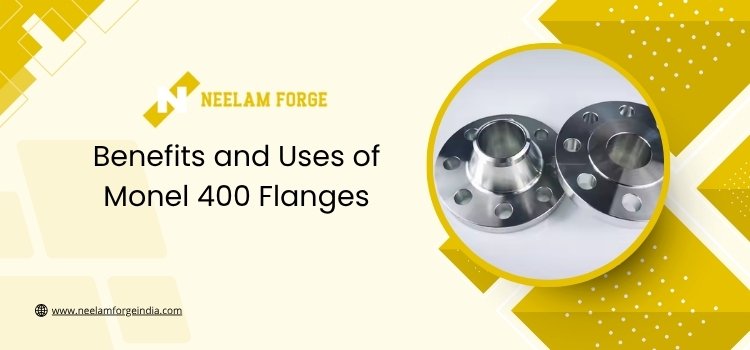
Understanding the Importance of Monel 400 Flanges in Industrial Applications
Monel 400 flanges are highly valued in industrial piping and engineering due to their exceptional strength, durability, and resistance to corrosion. Made primarily of nickel and copper, they perform reliably in severe conditions found in the marine, chemical, and hydrocarbon processing sectors. Their standout properties, outstanding performance in seawater and de-aerated acid environments, plus the ability to withstand high mechanical loads over a long service life, make them a strong fit for offshore drilling systems, heat exchangers, and chemical plants where safety and reliability are non-negotiable.
What Makes Monel 400 Flanges Unique?
Monel 400 flanges are not ordinary piping components. Their nickel-copper alloy composition (roughly 63–70% nickel, 28–34% copper) gives them strong resistance to seawater and to non-oxidizing (reducing) acids and alkaline compounds. Unlike standard steel flanges, Monel 400 performs well under reducing conditions specifically, a distinction that matters when selecting it for a given process, since it does not perform as well in oxidizing environments (see the corrosion resistance notes below).
Typical Composition (UNS N04400):
- Nickel (Ni): 63.0 – 70.0%
- Copper (Cu): 28.0 – 34.0%
- Iron (Fe): ≤ 2.5%
- Manganese (Mn): ≤ 2.0%
- Carbon (C): ≤ 0.3%
- Silicon (Si): ≤ 0.5%
- Sulphur (S): ≤ 0.024%
Forged Monel 400 flanges are typically manufactured to ASTM B564, UNS N04400, dimensioned per ASME B16.5.
Key Features of Monel 400 Flanges:
- Excellent seawater corrosion resistance and strong resistance to reducing (de-aerated) acids.
- Superior mechanical characteristics, including excellent toughness at cryogenic temperatures as low as −196°C.
- Good weldability and formability, using procedures similar to austenitic stainless steel.
- Low long-term maintenance once correctly specified for the right service conditions.
These qualities make Monel 400 flanges a strong choice in industries where corrosion durability and mechanical reliability are essential, provided the specific process chemistry is matched correctly to the alloy’s known strengths.
Applications of Monel 400 Flanges in Different Industries
1. Offshore and Marine Engineering
Monel 400 flanges are widely used in the marine industry for their resistance to seawater corrosion and biofouling. Common applications include shipbuilding, desalination stations, and offshore platforms, where saltwater exposure would degrade many standard alloys.
2. Petrochemical and Chemical Processing
Monel 400 performs reliably in reducing (de-aerated) acid environments, making it suitable for heat exchangers, pressure vessels, and reactors handling hydrofluoric acid across all concentrations, and hydrochloric or sulfuric acid under non-oxidizing conditions. It is not recommended for oxidizing acids such as nitric acid, or for acid environments where oxidizing salts are present, as corrosion resistance drops sharply in those conditions.
3. Oil and Gas Industry
In pipelines and refining units, Monel 400 maintains good mechanical properties across a wide temperature range, supporting leak-free operation and safety in crude processing and alkylation units where HF or sulfuric acid is present.
4. Power Generation
Thanks to its thermal stability, Monel 400 has a long history of use in feedwater heaters, condensers, and steam-system piping in power generation plants, including some legacy nuclear steam-generator applications. For any nuclear-grade or safety-critical application, material selection should always be confirmed against the specific plant’s engineering and regulatory requirements.
5. Aerospace and Defense
Monel 400’s strength and corrosion resistance make it suitable for select aerospace fasteners and components exposed to corrosive fuels or marine-adjacent environments.
Benefits of Using Monel 400 Flanges
1. Corrosion Resistance
The primary reason industries invest in Monel 400 flanges is their ability to withstand seawater and de-aerated acid exposure without the pitting and stress-corrosion cracking that affects many stainless steels in chloride-rich environments.
2. Durability and Longevity
Correctly specified for the right service, these flanges resist degradation over years of harsh-environment use, reducing replacement frequency and cost.
3. High Thermal Stability
Monel 400 retains useful mechanical properties from cryogenic temperatures up to roughly 500–538°C, above which oxidation and sulphidation resistance become the limiting factors.
4. Long-Run Cost Effectiveness
The higher upfront material cost is often offset over time by longer service life and lower maintenance in the right application.
5. Versatility in Design
Monel 400 flanges are available in weld neck, slip-on, blind, socket weld, and threaded styles, covering a wide range of industrial piping configurations.
Different Types of Monel 400 Flanges
- Weld Neck Flanges: Suited to high-pressure pipelines thanks to the tapered hub’s smooth stress transfer.
- Slip-On Flanges: Easy to install and align; best for lower-pressure applications.
- Blind Flanges: Used to cap or seal the end of a piping system.
- Socket Weld Flanges: Well suited to small-diameter, high-pressure pipe.
- Threaded Flanges: Used where a fast, weld-free connection is needed.
Maintenance Tips for Monel 400 Flanges
To help these flanges perform at their rated service life:
- Periodically inspect for signs of stress or corrosion, particularly at weld joints.
- Use compatible gaskets and bolts to avoid galvanic corrosion at the joint.
- Install at the manufacturer’s recommended torque values.
- Keep surfaces clean and confirm the process fluid remains within the alloy’s de-aerated/reducing service range.
Conclusion
Monel 400’s nickel-copper composition gives it genuinely strong corrosion resistance, mechanical toughness, and durability, but that resistance is condition-dependent, performing best under reducing, de-aerated service rather than oxidizing environments. Specified correctly, these flanges deliver real reliability across marine systems, chemical plants, and oil refineries. Investing in Monel 400 alloy flanges is as much about matching the right material to the right process chemistry as it is about upfront performance and durability.
FAQs
Q1. What are the key benefits of Monel 400 flanges in marine applications?
Monel 400 flanges resist seawater corrosion, pitting, and biofouling better than most standard alloys, while maintaining mechanical integrity under pressure, making them well suited to shipbuilding and offshore platforms.
Q2. Can Monel 400 flanges be used in high-temperature situations?
Yes. Monel 400 maintains useful mechanical properties up to roughly 500–538°C, giving it solid thermal stability for power generation and petrochemical processes. Above that range, oxidation and sulphidation resistance become limiting factors, so higher-temperature service should be reviewed case by case.
Q3. How do Monel 400 flanges compare to stainless steel flanges?
Stainless steel flanges are generally less expensive and perform well in oxidizing environments. Monel 400 flanges cost more but outperform stainless steel in seawater and in reducing (de-aerated) acid conditions, thanks to their high nickel content. Stainless steel remains the better choice for oxidizing acid service, where Monel 400 is not recommended.
Looking for premium-quality Monel 400 flanges for your industrial projects? Connect with us today for durable, corrosion-resistant solutions matched to your specific process conditions.
Email us at sales@neelamforgeindia.com or contact us to request a quote.