
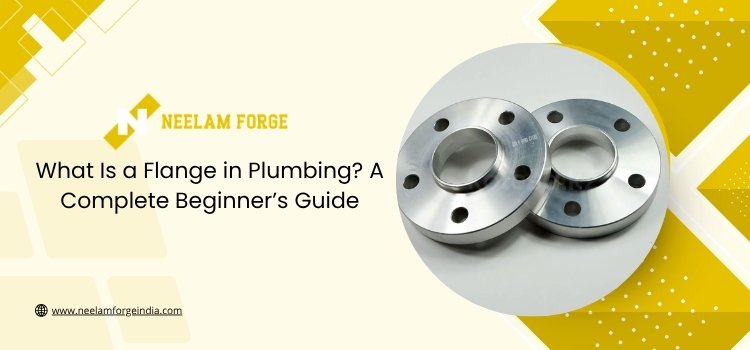
What Is a Flange in Plumbing?
A flange in plumbing is a ring or plate fixed to the end of a pipe so it can be bolted to another pipe, a valve, a pump, or a fixture. A gasket between the two faces seals the joint.
The word covers two different parts. In homes, it usually means the closet flange under a toilet. In commercial and industrial piping, it means a pipe flange that joins pipes, valves, and equipment.
This beginner’s guide covers both, starting with pipe flanges. The main advantage of a flanged joint is that it can be taken apart easily, as this overview of flanges explains.
Key Takeaways
- A flanged joint is two flange faces, a gasket, and bolts.
- Pipe flanges come in several types, including weld neck, slip-on, threaded, lap joint, and blind.
- A closet flange is a different part. It mounts a toilet to the floor and connects it to the drain.
How a Pipe Flange Works
A flanged joint has four basic parts:
- Two flanges, one on each pipe or piece of equipment.
- A gasket between the faces to seal the joint.
- Bolts and nuts that pull the faces together.
- A bolt circle, the ring of holes that must line up on both flanges.
Tightening the bolts evenly compresses the gasket, which creates the seal. To service the line, you remove the bolts, replace the gasket, and bolt the joint back together.
Types of Plumbing Flanges
Each flange type attaches to the pipe differently and suits a different job. Here is a quick comparison:
| Flange Type | How It Connects | Typical Use |
| Weld Neck Flange | Butt welded to the pipe through a tapered hub | High-pressure, high-temperature, and cyclic lines |
| Slip-On Flange | Slides over the pipe and is fillet welded inside and outside | Water, utility, and low to medium pressure lines |
| Threaded Flange | Screws onto the pipe, no welding needed | Small lines where welding is not practical |
| Lap Joint Flange | Loose flange over a welded stub end | Lines that are dismantled often |
| Blind Flange | Bolts onto a pipe end to close it | Line ends, isolation, and pressure testing |
| Closet Flange | Mounts to the floor and connects to the drain pipe | Toilets in bathrooms |
Not sure which one fits? Our guide to slip-on flange vs blind flange compares two of the most common types, and our flange dimensions chart helps you match sizes.
Common Flange Materials
Home plumbing flanges are usually PVC, ABS, or cast iron. Pipe flanges for commercial and industrial systems are forged from stronger metals:
- Stainless steel for corrosion resistance.
- Duplex steel for higher strength in aggressive media.
- Nickel alloys such as Inconel for extreme heat and chemicals.
Pick the material based on the fluid, temperature, pressure, and corrosion risk.
Where Flanges Are Used
- Pump and valve connections that must be removed for service.
- Water supply, cooling water, and fire protection lines.
- Industrial process and utility piping.
- Line ends, isolation points, and pressure test setups.
- Bathroom floors, where closet flanges hold toilets in place.
What Is a Closet Flange?
A closet flange, also called a toilet flange, mounts a toilet to the floor and connects it to the drain pipe. It is a ring with slots for the closet bolts and a socket that fits into or over the drain pipe.
Placement matters. The flange should sit on top of the finished floor, flat and level, so the toilet seals properly and sewer gases stay out of the house.
Signs of a problem include:
- Persistent sewer odours.
- A toilet that rocks or feels loose.
- A cracked or corroded flange.
Check the closet bolts first, since loose bolts are the simplest cause. If the flange itself is cracked, corroded, or sitting too low, call a licensed plumber.
Conclusion
So, what is a flange in plumbing? It comes down to two ideas. A pipe flange is a bolted joint that connects and isolates pipes, valves, and pumps. A closet flange is the fitting that holds a toilet to the floor and the drain.
For pipe systems, match the flange type, size, pressure class, and material to the job.
FAQs
Q1. Can flanges be installed without welding?
Yes, threaded flanges screw onto the pipe and need no welding, which suits small lines. Slip-on, weld neck, and lap joint flanges are welded to the pipe or to a stub end.
Q2. Is a flange necessary in plumbing systems?
Not always. Small lines often use threaded, soldered, or compression joints. Flanges are used where a joint must be bolted and removable, such as larger pipes, pumps, valves, and equipment. Floor-mounted toilets also use a closet flange.
Q3. Are flanges reusable?
Yes, if they are not damaged or corroded. Always fit a new gasket when you reassemble the joint.
Neelam Forge India supplies stainless steel and alloy pipe flanges from Mumbai. Reach us through the contact page or email sales@neelamforgeindia.com.